
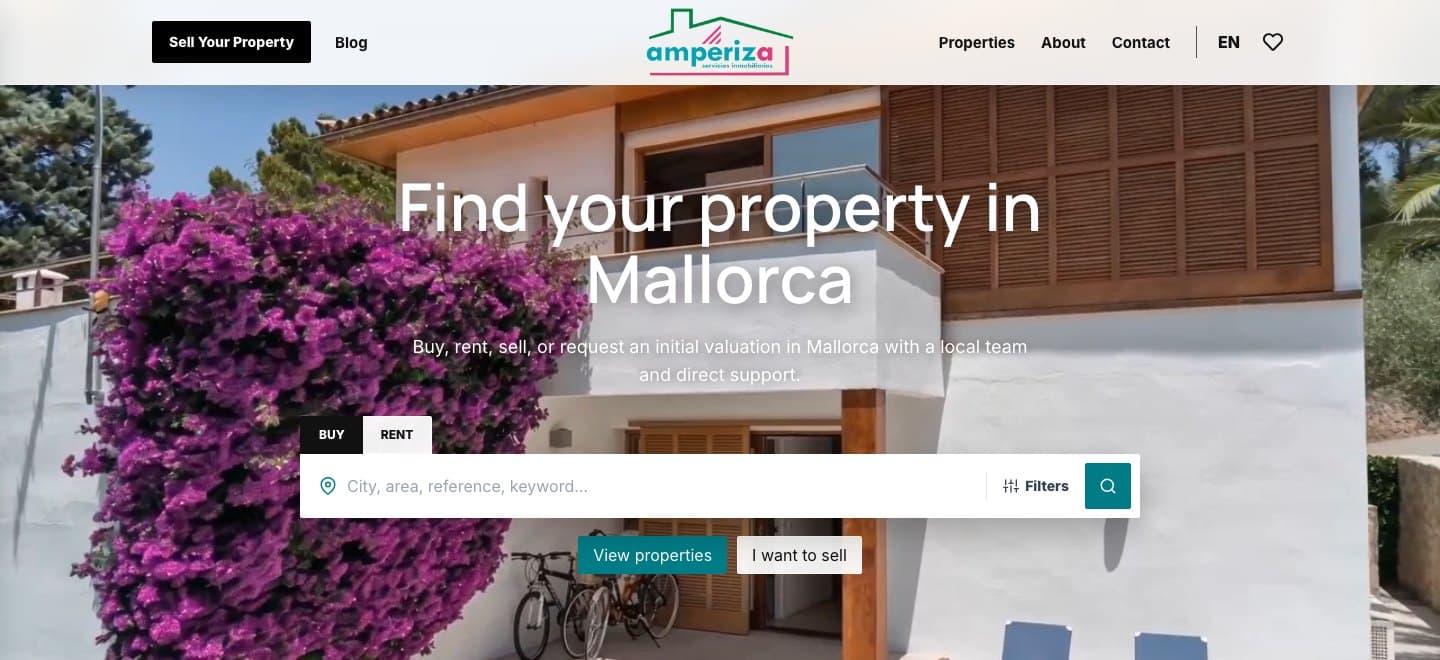
The brief
Amperiza is a family real estate business in Alcúdia that manages its portfolio and commercial follow up in Inmovilla. The agency needed a website of its own that presented that portfolio properly, without asking the team to maintain a second catalogue.
Visit the live siteWhat it had to solve
- The portfolio had to stay in Inmovilla, where the team already works every day.
- Buyers arrive with different intentions, browsing an area, chasing a single reference, or weighing up several homes at once.
- Owners considering a sale needed a route that was not the same form as a property enquiry.
- The agency sells to both local and international buyers, so the site had to work in two languages without duplicating the catalogue.
How it was carried out
The phases the project moved through, in order.
Portfolio and connection
Reviewed what the Inmovilla account could share and how often changes needed to appear, then agreed the connection. The website checks each update and keeps the last valid catalogue rather than emptying the site if an update arrives incomplete.
Search built on the real catalogue
Filters were drawn from the properties the agency actually sells, covering operation, price, property type, bedrooms, surface and features, with area, reference and keyword search, and a switch between list and map.
Property pages and favourites
Each record carries gallery, price, reference, location, surfaces, rooms, features and energy information, with a contact route tied to that property. Visitors can save homes and come back to their selection without creating an account.
Four enquiry routes
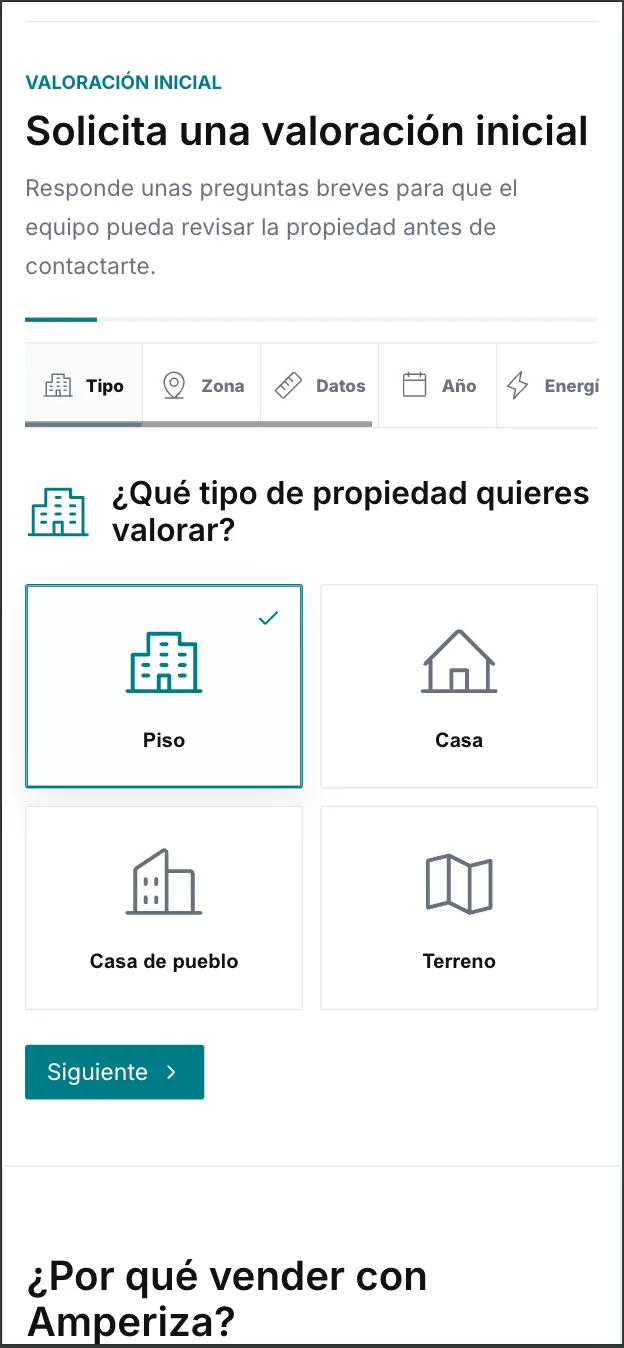
Property enquiry, general contact, initial valuation request, and owners wanting to sell were separated, so each one reaches the team with the details needed to answer it.
Two languages with editorial control
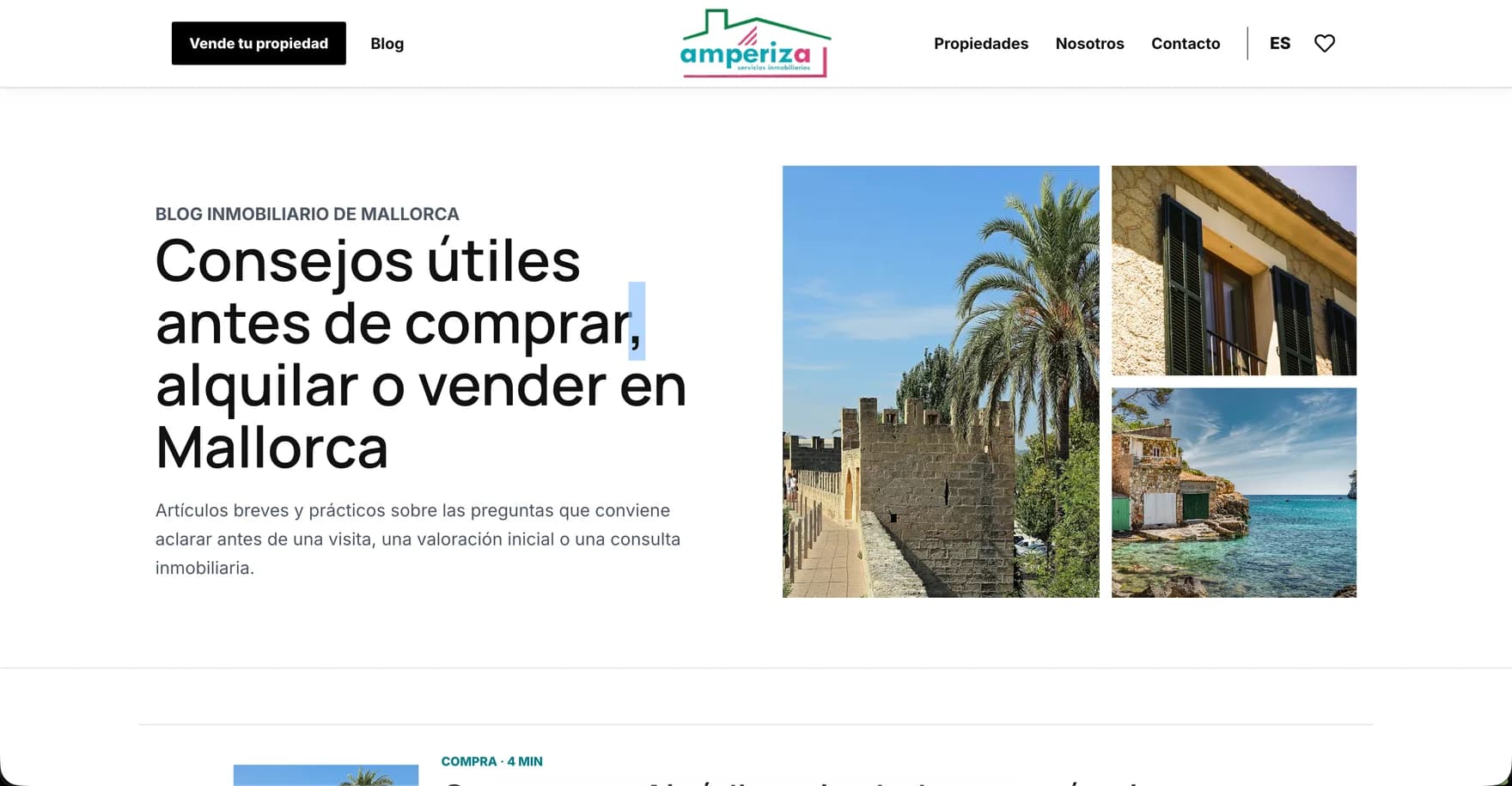
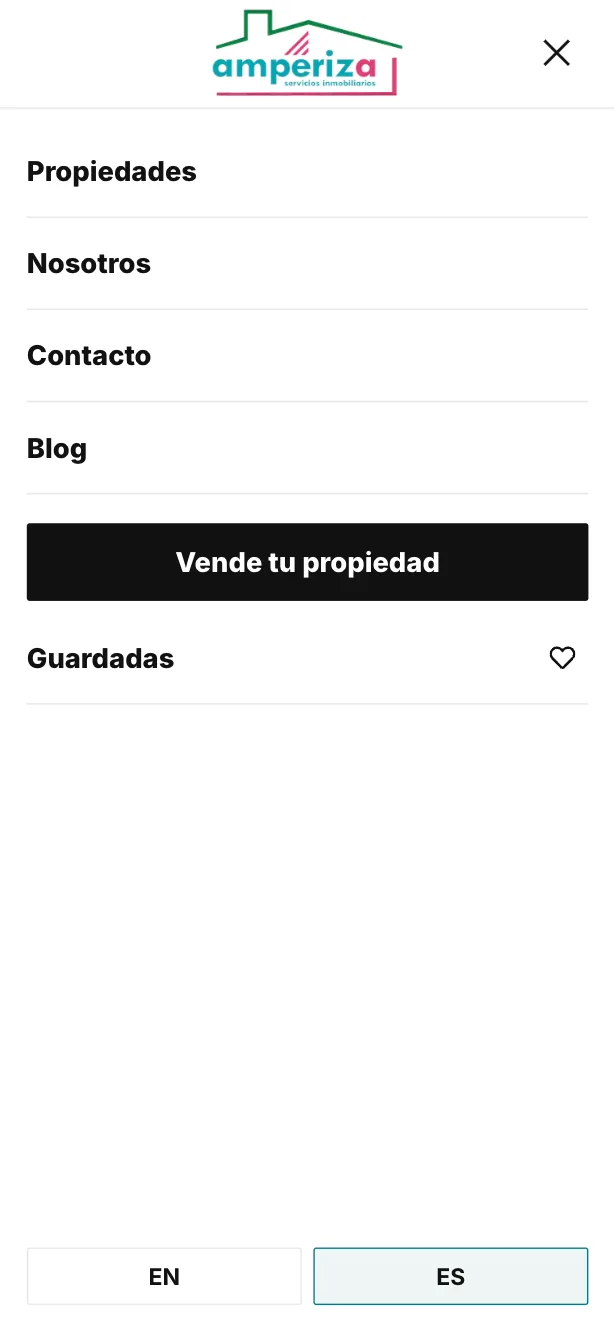
Spanish and English across the portfolio and public pages, with the English version reviewable by the agency without touching the source content held in Inmovilla.
Agency panel
A panel limited to website controls. The agency can view the received catalogue without editing CRM data, choose and order featured properties, review the English presentation, read website enquiries, and see whether an update or a delivery needs attention.
Testing and launch
Listings added, changed and withdrawn were checked end to end, along with forms from phone and desktop, enquiry delivery with reference and context, spam protection, and measurement that only activates after consent.
What the business ended up with
- Connected portfolio that does not require double publishing
- Search, filters and map matched to the real catalogue
- Property pages with a contact route per property
- Favourites without account creation
- Spanish and English with editorial review
- Four separated enquiry routes
- Website panel scoped to website controls only
Pages from the site
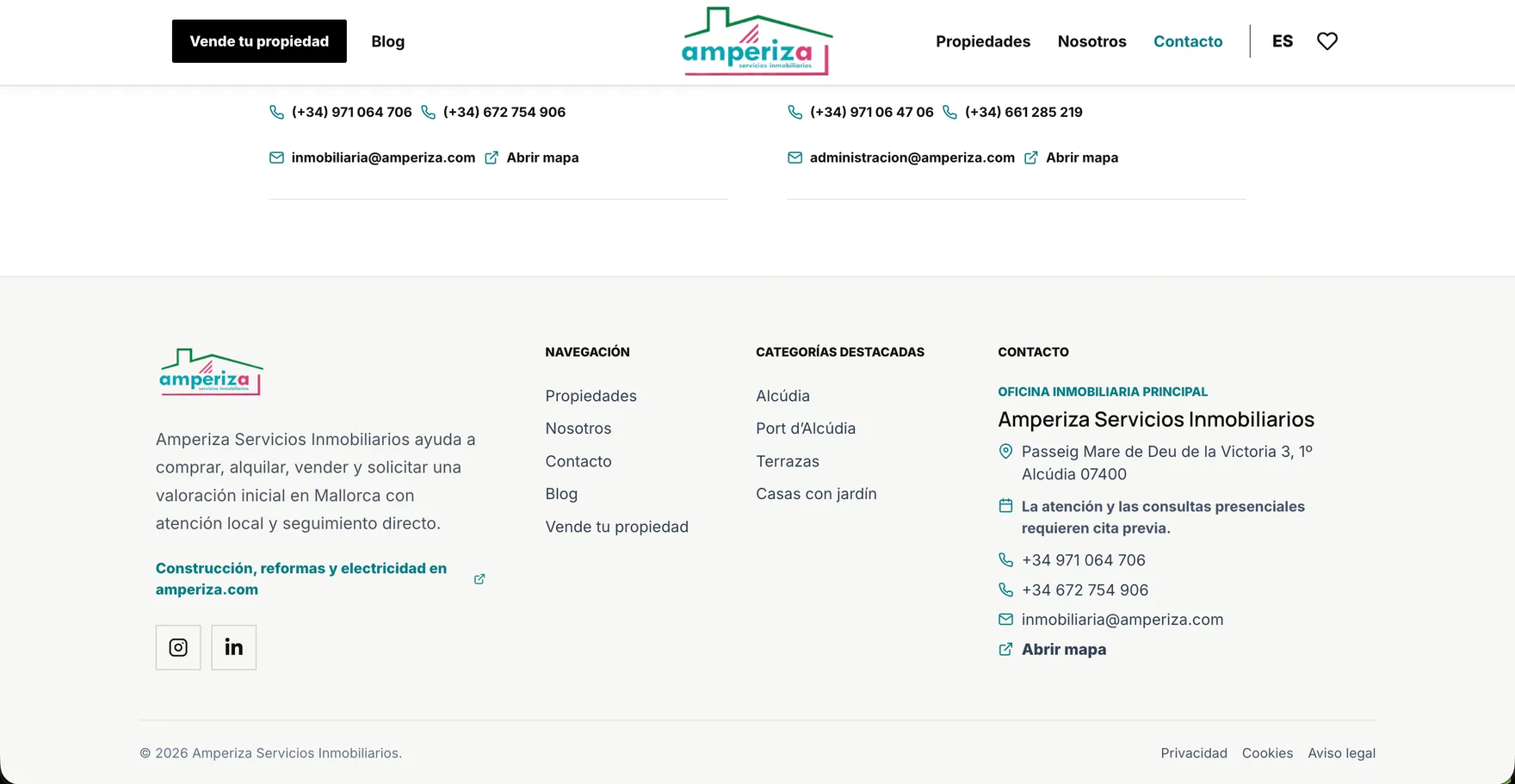
How it was built
- Next.js and React
- Pages are rendered before they reach the visitor rather than assembled in the browser afterwards.
- PostgreSQL
- Holds the received catalogue so that area, price and map searches answer from one prepared set of properties.
- Inmovilla connection
- The catalogue stays in the CRM. The website keeps the last valid version if an update arrives incomplete.
- Spanish and English
- Both versions run from the same catalogue, with the English presentation reviewable by the agency.
- Consent based measurement
- Nothing is measured until a visitor agrees to it.
Measured performance
The delivered website was measured with PageSpeed Insights on desktop and mobile. These are Lighthouse lab results from a simulated environment on the date shown, not field data from real visitors.
| Measure | Desktop | Mobile |
|---|---|---|
| Performance score | 96 | 71 |
| SEO score | 100 | 100 |
| First Contentful Paint (FCP) | 0.7 s | 2.9 s |
| Largest Contentful Paint (LCP) | 1.3 s | 6.0 s |
| Total Blocking Time (TBT) | 10 ms | 10 ms |
| Cumulative Layout Shift (CLS) | 0 | 0 |
| Speed Index (SI) | 1.3 s | 4.6 s |
Lab results vary between runs as network conditions, processing and page resources change. A capture describes that run, not a fixed property of the website.
They do not predict search positions, enquiry volume or any other business outcome.
The mobile run recorded its content later than the desktop run, while blocking time and layout shift stayed level across both devices.